


1. Introduction
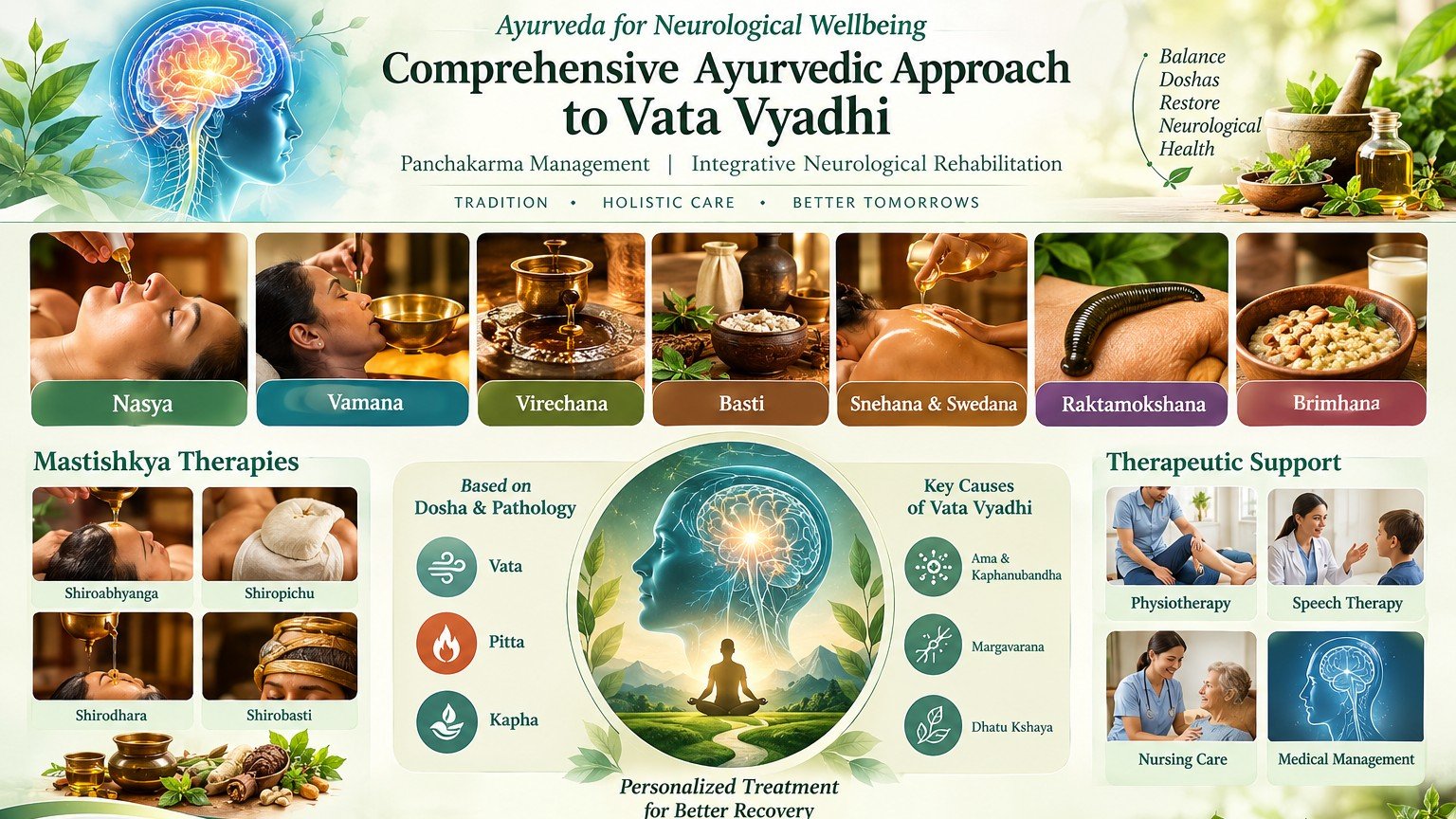
Vata plays a significant role in regulating the physiological functions of the body and mind. Vata Vyadhi encompasses various neurological and neuromuscular disorders requiring individualized management based on disease stage, Dosha involvement and patient condition. Management includes selected Panchakarma therapies, Shamana Aushadhis and supportive rehabilitation.
2. Pathogenesis of Vata Vyadhi
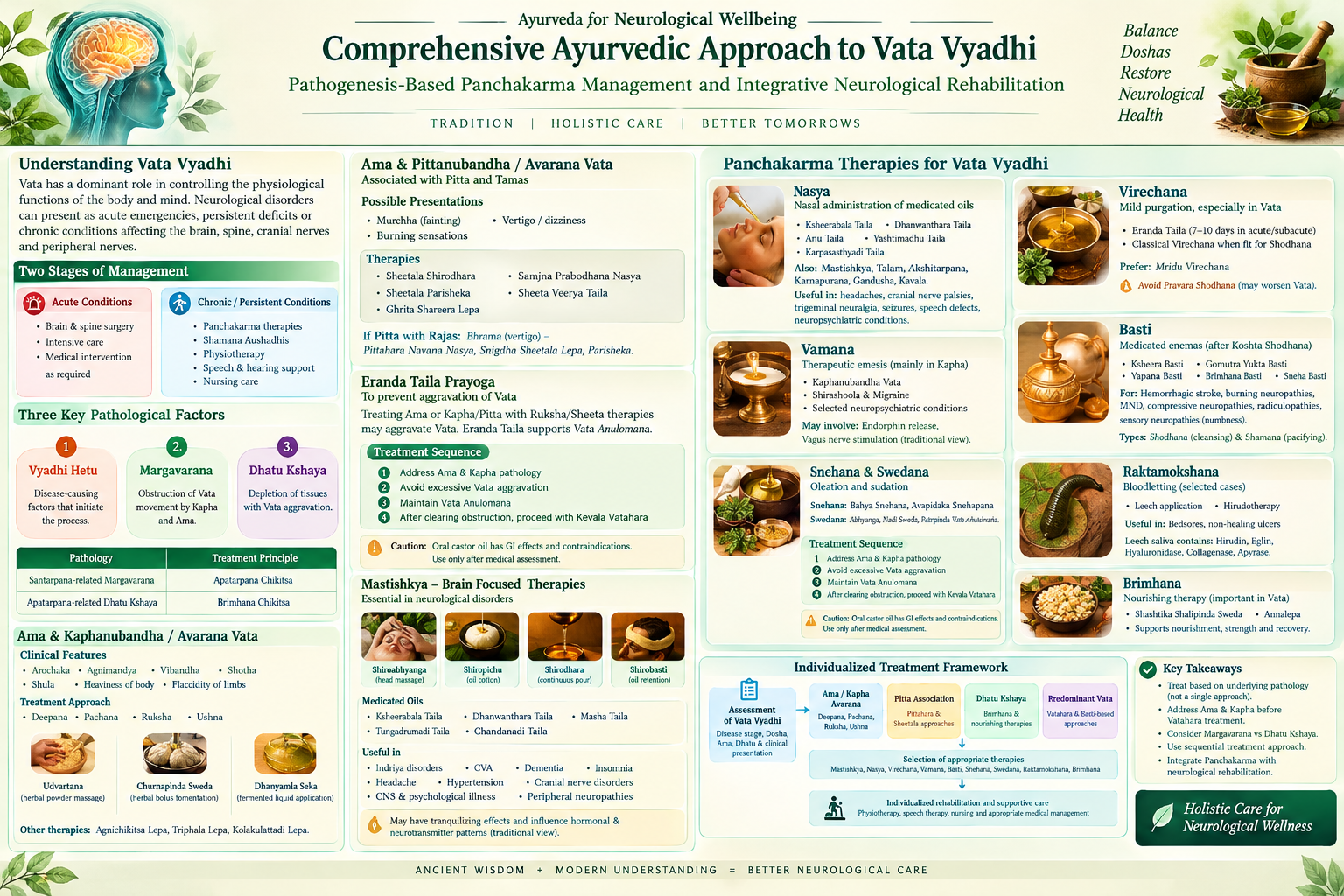
The article identifies three major pathological factors:
Vyadhi Hetu: Disease-causing factors.
Margavarana: Obstruction of normal Vata movement.
Dhatu Kshaya: Depletion of body tissues.
Treatment is selected according to the underlying pathology, with Apatarpana for Santarpana-related Margavarana and Brimhana for Dhatu Kshaya.
3. Ama and Kaphanubandha / Avarana Vata
Ama and Kapha association may present with Arochaka, Agnimandya, Vibandha, Shotha, Shula, heaviness and limb flaccidity.
Treatment approach: Deepana, Pachana, Ruksha and Ushna therapies.
Procedures: Udvartana, Churnapinda Sweda, Dhanyamla Seka, Agnichikitsa Lepa, Triphala Lepa and Kolakulattadi Lepa.
4. Ama and Pittanubandha / Avarana Vata
Pitta-associated Vata Vyadhi may present with Bhrama, Daha and Murchha.
Treatment approach: Pittahara and Sheetala therapies.
Procedures: Sheetala Shirodhara, Samjna Prabodhana Nasya, Sheetala Parisheka, Pittahara Navana Nasya, Snigdha Sheetala Lepa and cooling medicated oil applications.
5. Eranda Taila Prayoga
Eranda Taila is discussed to support Vata Anulomana during the management of Ama and Kapha-Pitta-associated conditions. Following the management of Ama and Kapha Avarana, Kevala Vatahara treatment may be considered according to the patient's condition.
6. Mastishkya Chikitsa
Mastishkya therapies are emphasized for neurological conditions involving the brain and nervous system.
Procedures:
Shiroabhyanga
Shiropichu
Shirodhara
Shirobasti
Medicated oils: Ksheerabala Taila, Dhanwanthara Taila, Masha Taila, Tungadrumadi Taila and Chandanadi Taila.
The article discusses their traditional applications in headache, insomnia, dementia, cranial nerve disorders, CVA and peripheral neuropathies.
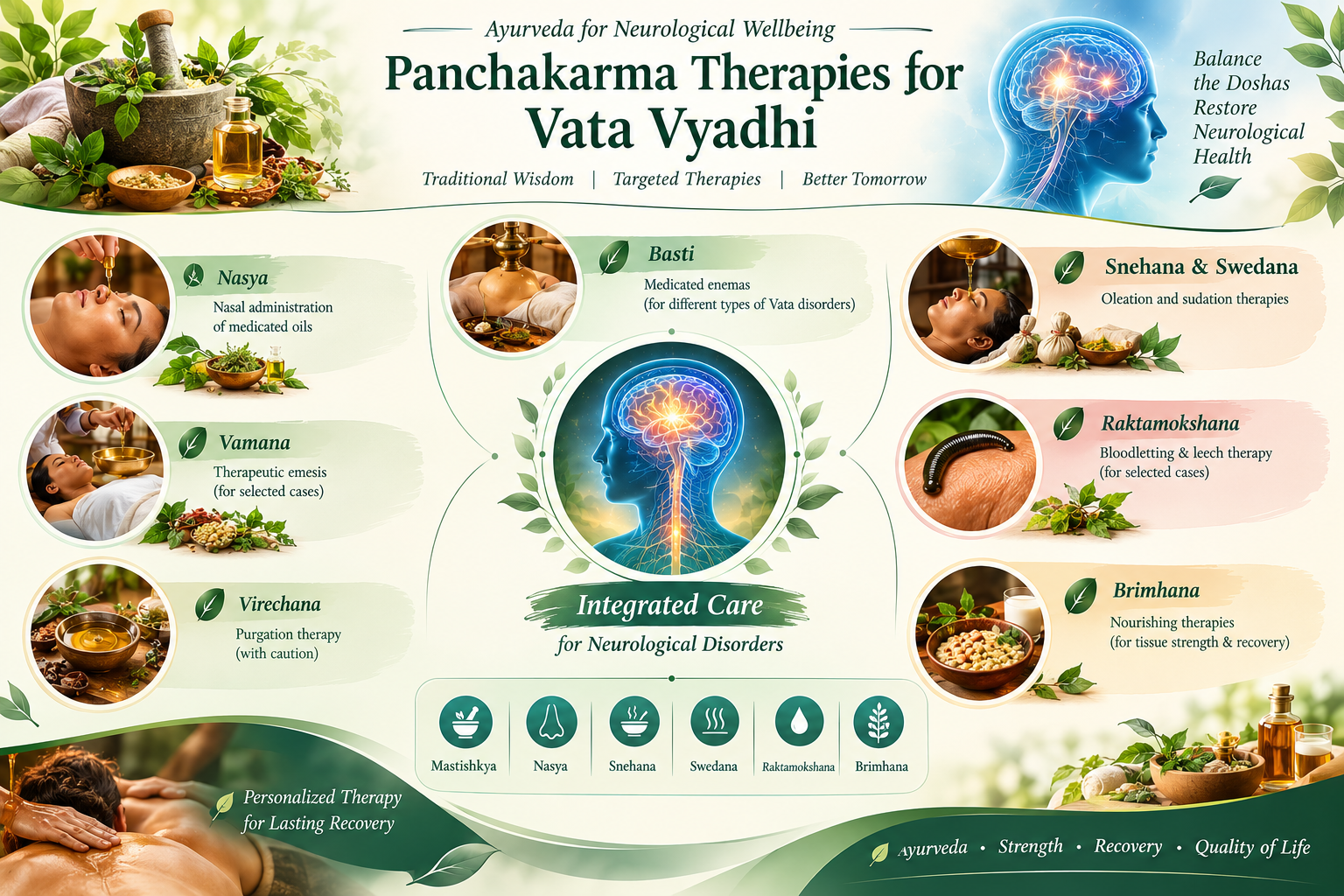
7. Nasya Karma
Nasya involves the administration of medicated preparations through the nasal route. The article describes its application in neurological conditions involving the brain, cranial nerves and cervical region.
Preparations: Ksheerabala Taila, Dhanwanthara Taila, Anu Taila, Yashtimadhu Taila and Karpasasthyadi Taila.
Associated therapies include Talam, Akshitarpana, Karnapurana, Gandusha and Kavala.
8. Virechana Karma
Mridu Virechana is emphasized in Vata Vyadhi to avoid excessive aggravation of Vata. Nitya Virechana with Eranda Taila for 7–10 days is discussed for selected acute and subacute conditions. Classical Virechana is considered according to the patient's fitness for Shodhana.
9. Vamana Karma
Vamana is described primarily for selected Kaphaja and Kaphanubandha Vata conditions. The article also discusses its traditional application in Shirashoola, migraine and selected neuropsychiatric conditions.
10. Basti Karma
Basti is considered an important therapeutic approach in Vata Vyadhi. Selection depends on Dosha involvement, disease presentation and patient condition.
Types mentioned:
Ksheera Basti
Gomutra Yukta Basti
Yapana Basti
Brimhana Basti
Sneha Basti
Both Shodhana and Shamana Basti are discussed for different therapeutic requirements.
11. Snehana and Swedana
These therapies are described as supportive interventions in Vata Vyadhi, particularly in selected bowel and bladder dysfunctions.
Snehana: Bahya Snehana and Avapidaka Snehapana.
Swedana: Abhyanga, Nadi Sweda, Patr apinda Sweda, Taila Seka, Upanaha and Veshtana.
12. Raktamokshana
Raktamokshana, including leech application (Jalaukavacharana), is discussed for selected conditions. Hirudotherapy is also mentioned in relation to bedsores and non-healing ulcers in bedridden patients.
13. Brimhana Chikitsa
Brimhana therapies are emphasized in Vata Vyadhi associated with Dhatu Kshaya.
Procedures: Shashtika Shalipinda Sweda and Annalepa.
These therapies are traditionally intended to provide nourishment and support tissue strength.
14. Gut–Brain Axis and Neurological Health
The article highlights the relationship between gut microbiota and neurological function through the Gut–Brain Axis. It discusses bidirectional communication between the Central Nervous System (CNS) and Enteric Nervous System (ENS), along with possible influences on brain chemistry and neuroendocrine regulation.
15. Integrative Management and Rehabilitation
Comprehensive management involves individualized combinations of Shodhana, Shamana, Brimhana and Rasayana therapies, supported by appropriate physiotherapy, speech therapy, hearing support and nursing care.
Conclusion
Effective Ayurvedic management of Vata Vyadhi requires individualized treatment based on Dosha involvement, Ama, Margavarana, Dhatu Kshaya and disease stage. Appropriate selection of Panchakarma therapies, combined with supportive rehabilitation and medical care, forms the central approach discussed in the article.
Article by: Dr. Dibyajyoti moharana, Assistant Professor ,Department Of Panchakarma,ssuaych.org
Gallery




Comments (0)
Login or Register to leave a comment.